
-
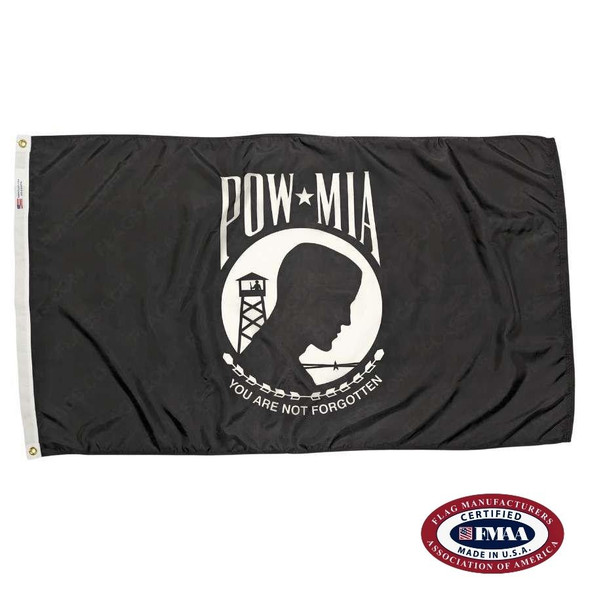
POW/MIA Flag
$44.50Honor the sacrifices made by our servicemembers with this POW/MIA flag, a dedication to all those who were held captive by enemy forces or disappeared during the conflict. This flag is required to be flown at military institutions and war memorials,... -

POW/MIA Sticker
$1.35Show your respect for American servicemembers who have been prisoners of war or went missing in action by displaying our POW/MIA sticker. This durable, water-resistant sticker is ideal for use on cars, trucks, and personal items. Each POW sticker is... -
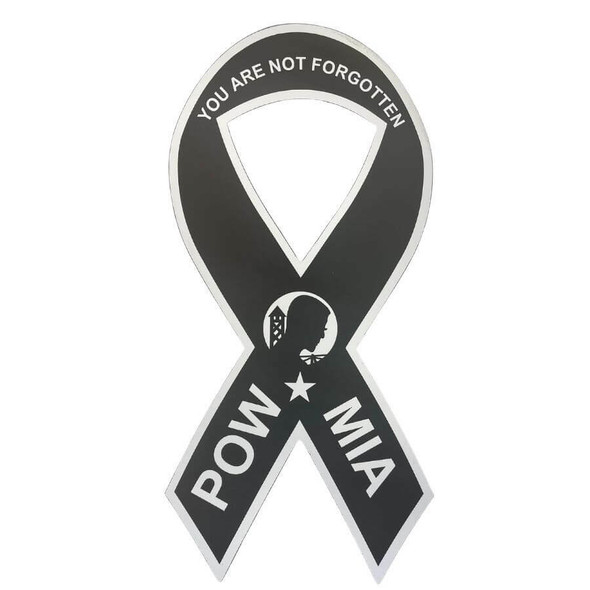
POW/MIA Magnet
$3.95Show your remembrance of American troops taken as prisoners of war or who went missing during conflict with our POW MIA magnet. This magnet is built for display on cars, trucks, and boats. Our POW MIA magnets have a .30 mil magnetic backing for simple... -
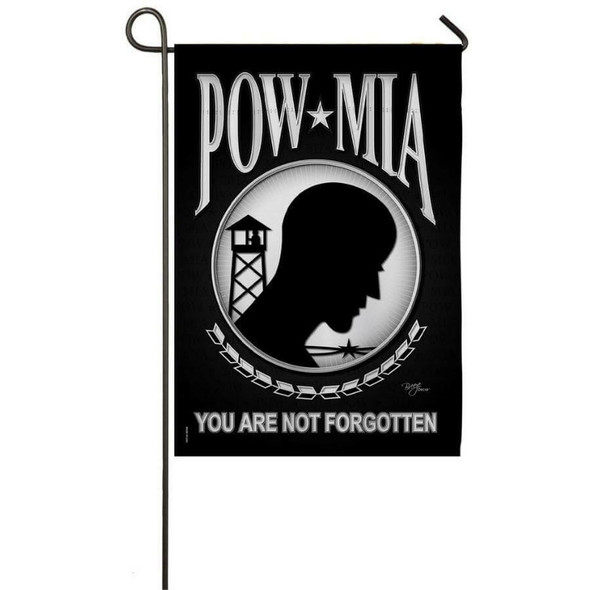
POW/MIA Garden Flag
$16.50Perhaps the most important United States Military flag, the POW/MIA flag honors prisoners of war and those missing in action. We remember these heroes by saying "you are not forgotten." Size: 13"x18" So it fits any standard garden flag...