
The History & Meaning Behind US Government Agency Flags
At Flags.com, we’re proud to introduce our collection of official agency flags representing some of the most distinguished branches of the United States government. Each flag is American-made to the highest standards and intended for authorized display by its respective agency. To ensure proper distribution, these flags are available exclusively through official government purchase orders.
Civilians and agency members alike are invited to learn about the agencies included in this collection and the meaning and symbolism behind these US government agency flags.
- Department of Defense Flag
- Department of Veterans Affairs Flag
- Department of Homeland Security Flag
- Department of State Flag
- Department of Health and Human Services Flag
- Department of the Treasury Flag
- Federal Bureau of Investigation Flag
- Border Patrol Flag
- National Security Agency Flag
- Central Intelligence Agency Flag
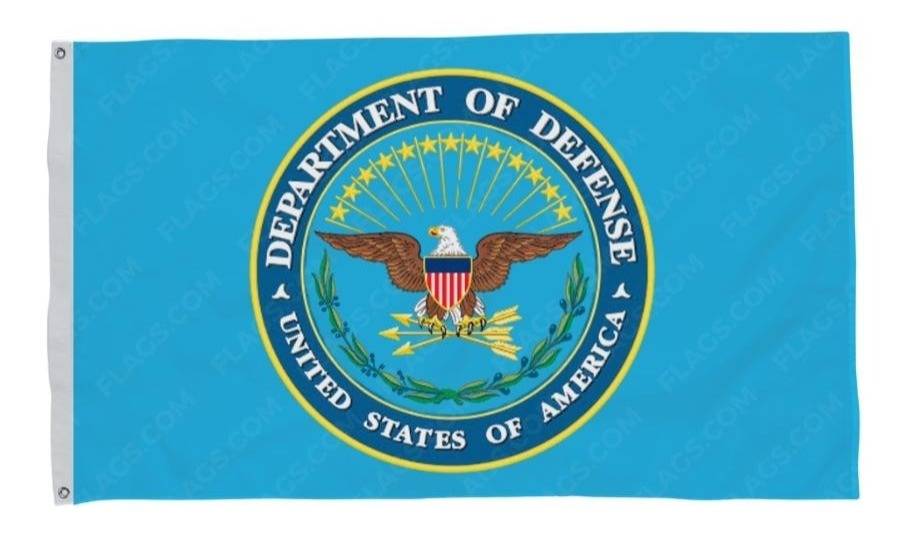
Department of Defense Flag
The main element of the seal is a bald eagle, the national bird of the United States, with an American flag shield on its chest. The eagle holds three arrows in its talons, representing the initial three branches of the US military: the Army, Navy, and Air Force. Above the eagle are 13 gold stars in an arc, symbolizing the original 13 colonies.
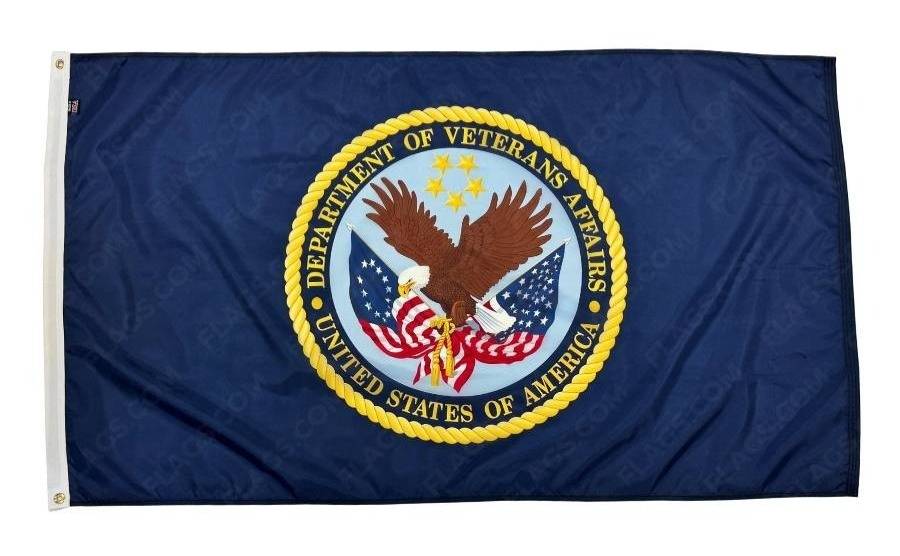
Department of Veterans Affairs Flag
The DVA seal also features a bald eagle; however, it holds flags in its talons instead of arrows. On the left is the Betsy Ross flag, the first official flag of the United States, while on the right is the modern American flag. These two flags represent the country's development and its history. Above the eagle are five gold stars in a pentagon shape, symbolizing the branches of the US military at the time of the seal’s creation: the Army, Navy, Air Force, Marine Corps, and Coast Guard.
Department of Homeland Security Flag
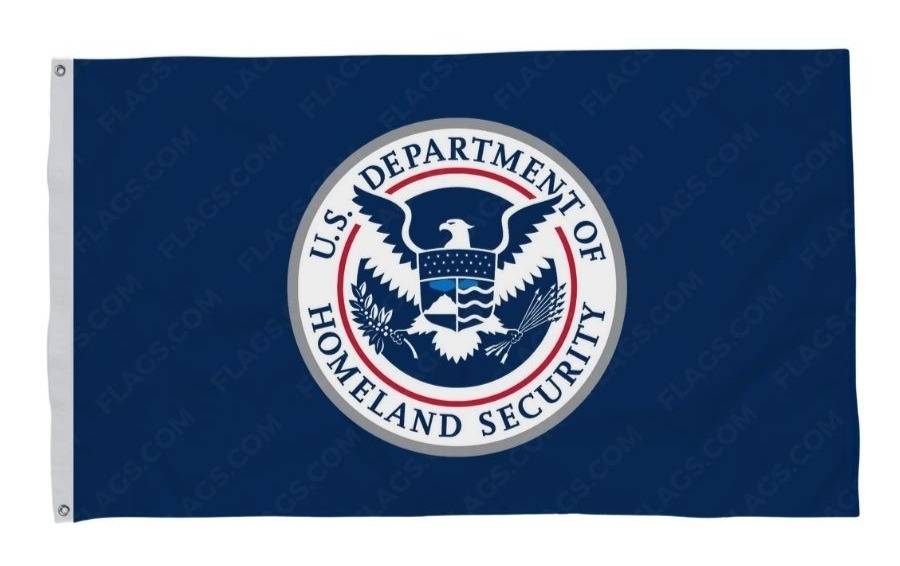
Just like the flags of the DoD and DVA, DHS flags consist of the agency’s seal centered on a blue background. The current seal and flag were adopted on June 19, 2003.
The Department of Homeland Security was created in November 2002, replacing the Office of Homeland Security, which itself had only been established in October 2001. Until 2003, the agency had been represented by a modified version of the United States Great Seal. The department’s unique seal, adopted in June 2003, was the result of a collaborative effort involving DHS leaders and employees, the US Commission on Fine Arts, the Ad Council, and Landor Associates.
The seal on the DHS flag depicts a blue and white bald eagle with its wings outstretched, holding an olive branch with 13 leaves in its left talon and 13 arrows in its right talon. On the eagle’s chest is a shield divided between a sky, mountainous landscape, and water, representing the United States' land and oceans. Inside the upper sky portion are 22 white stars, symbolizing the 22 bureaus that were merged to form the modern Department of Homeland Security.
Department of State Flag
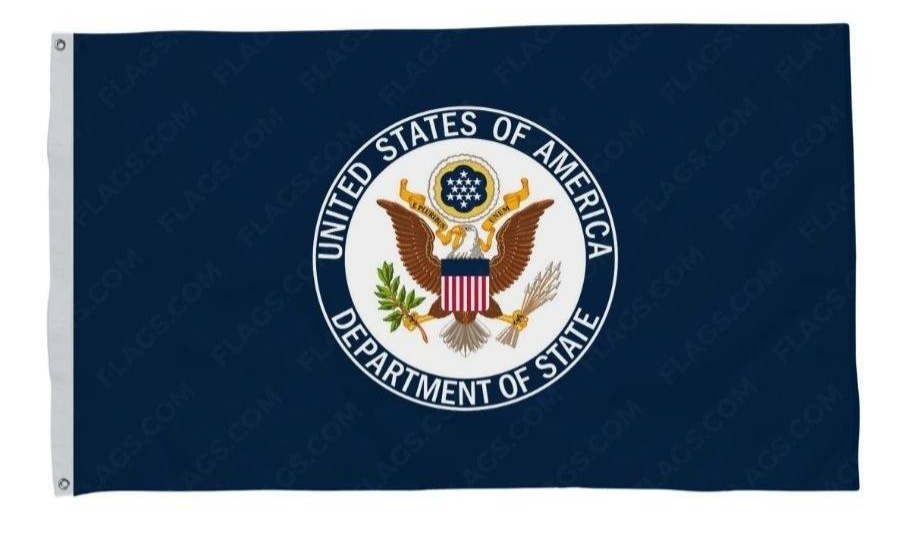
The US Department of State flag is very similar to the Department of Homeland Security's, as they are both based on the Great Seal of the US. This flag also depicts an eagle holding an olive branch with 13 leaves, and 13 arrows in either of its talons. Above the eagle is a ring containing 13 white stars, which also symbolize the original colonies.
Department of Health and Human Services Flag
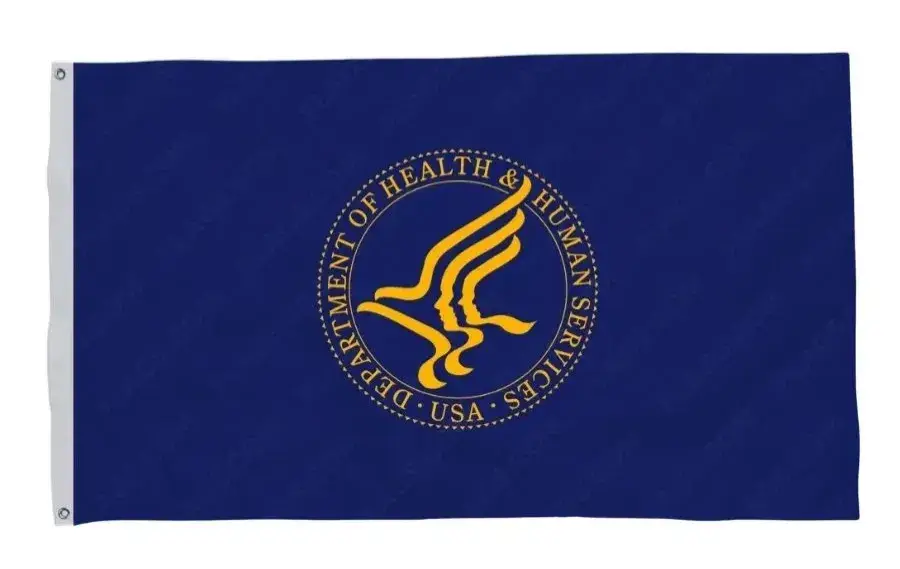
The DHHS flag features the agency’s symbol, drawn in gold, circled by the department's name. The symbol itself is a stylized drawing of a bald eagle, with the innermost lines mimicking human faces. This represents the agency’s mission and responsibility for the welfare of the American people. The seal was formally adopted on May 14, 2014.
Department of the Treasury Flag
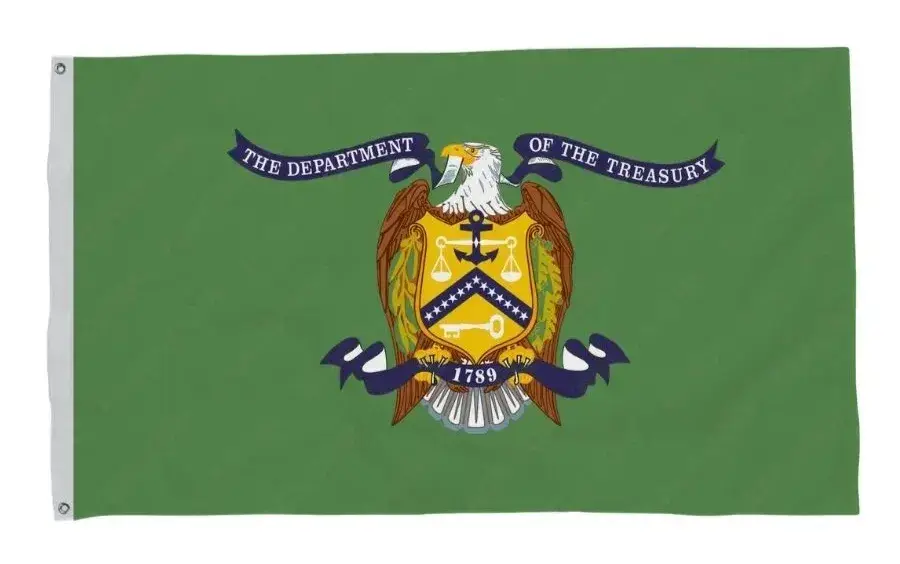
In the center of the dark green flag is a bald eagle holding a shield that contains an anchor, a scale, 13 stars, and a key. The scales on top of the anchor represent justice, while the key is in honor of the Treasury key, a traditional symbol of the department. The 13 white stars symbolize the original 13 colonies.
On the left of the shield is an oak branch for strength, and an olive branch on the right for peace. Below the shield is a banner bearing the year “1789”, which marks the founding of the Department of the Treasury.
Federal Bureau of Investigation Flag
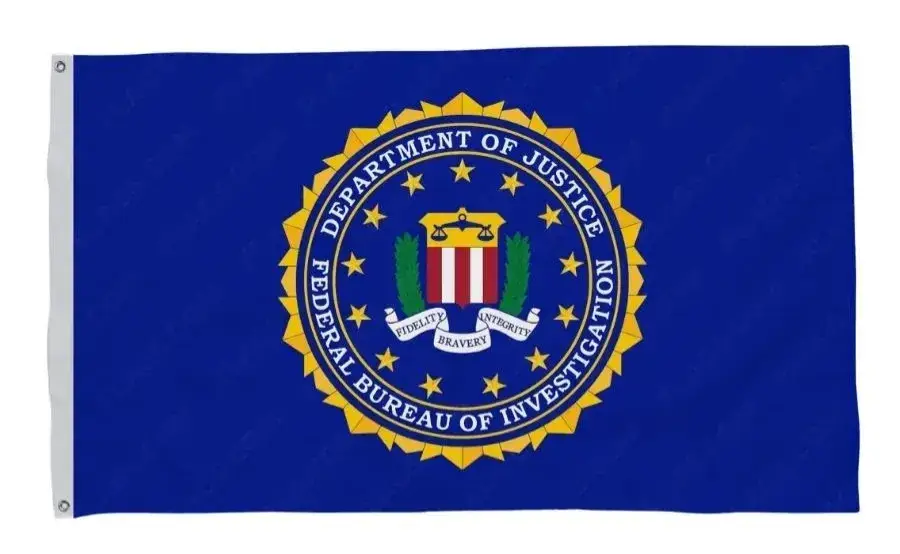
The seal depicts a shield flanked by two laurel branches, representing honor and distinction. The branches have 46 leaves in total, in reference to the number of US states that existed at the time of the FBI’s founding in 1908. Inside the shield is a set of scales, symbolizing justice. Below the scales are five vertical red and white stripes, mimicking the national flag of the United States. The shield and laurels are surrounded by 13 gold stars, representing unity and the original 13 colonies.
Border Patrol Flag
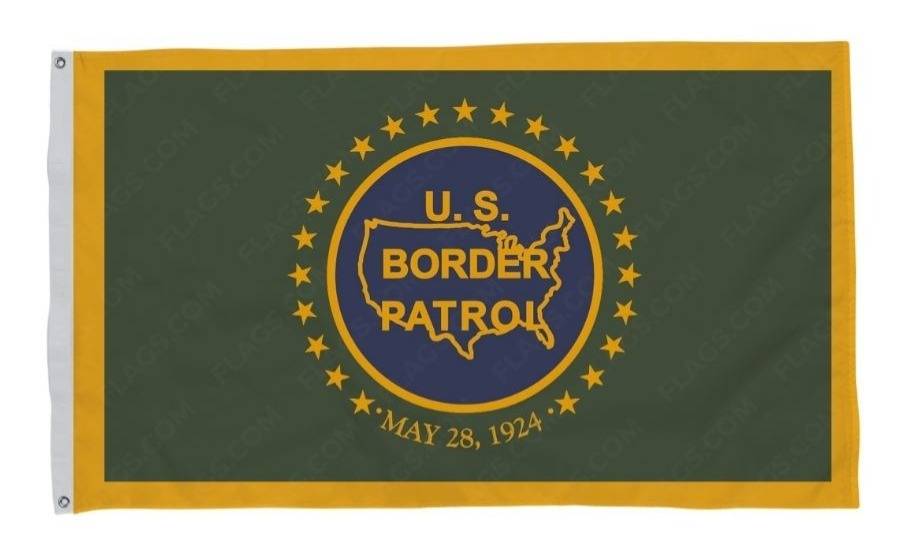
The US Border Patrol flag has the agency’s emblem in the center, surrounded by 23 gold stars. The stars represent the number of subdivisions that make up the Border Patrol. Below the emblem is the date “May 28, 1924”, the day on which the agency was established. Inside the emblem is the name of the agency on top of a map of the continental US.
National Security Agency Flag
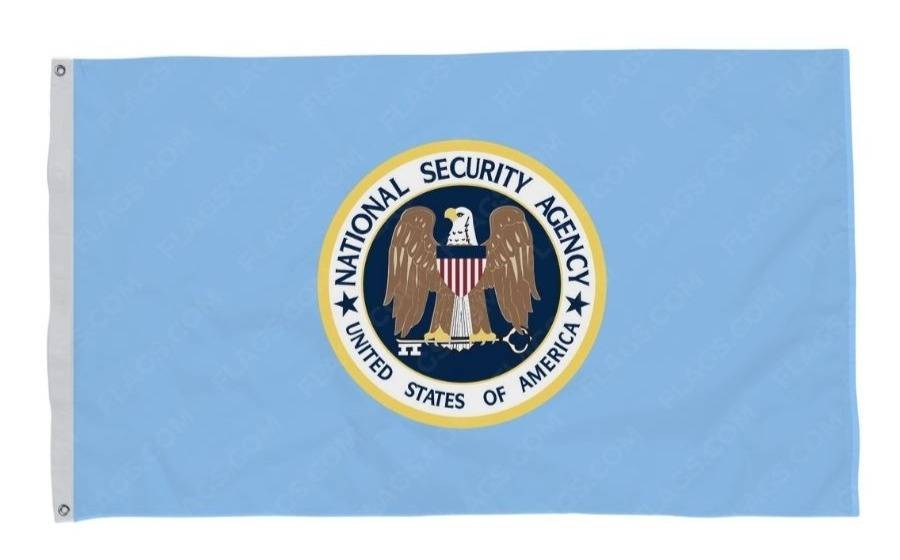
The National Security Agency was established in 1952 and used the Department of Defense’s seal. A design competition for a unique agency seal was proposed in 1955, but was not carried out. A new seal was adopted in 1963, yet the NSA claims that no information about its origin remains today. The NSA’s first flag was created in 1964 and bore the same seal.
In 1965, NSA Director Marshall Carter summoned Richard Nachman, who worked in the agency's graphic design branch. He was tasked with redesigning the agency’s seal, which he submitted the following year. In September of 1966, the new seal was officially adopted, with the agency’s flag updated to bear the new emblem.
The NSA flag depicts the agency’s heraldic insignia on a light blue field, which displays a bald eagle with its wings outstretched and an American flag shield on its chest. The eagle is holding a large key within its talons, which symbolizes security and the key of Saint Peter, one of Jesus’ apostles.
Central Intelligence Agency Flag
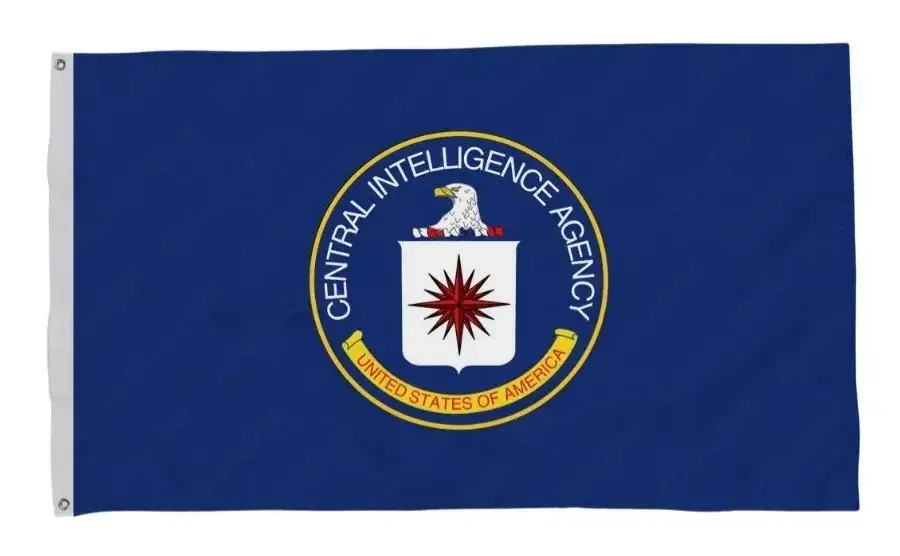
The CIA flag features the organization’s seal on a dark blue background. The seal has a large white shield in the center, representing defense. In the center of the shield is a compass rose, symbolizing the gathering of information from all over the world in one central location. The bald eagle on top of the shield indicates that the agency is always on alert.
Are you looking to place an order for your federal agency or governmental office? All of our agency flags meet specifications for display in an official capacity. Please note that we require a government-approved purchase order before we can start shipment. Contact us today to learn more about our offerings, obtain a quote, or explore bulk order options.

Caeden F.
Recent Posts
-
The History & Meaning Behind US Government Agency Flags
At Flags.com, we’re proud to introduce our collection of official agency flags represe
-
Patriot Day 2026: Remembering 25 Years Since September 11, 2001
September 11, 2026, marks 25 years since the terrorist attacks on the World Trade Center, Pentagon,