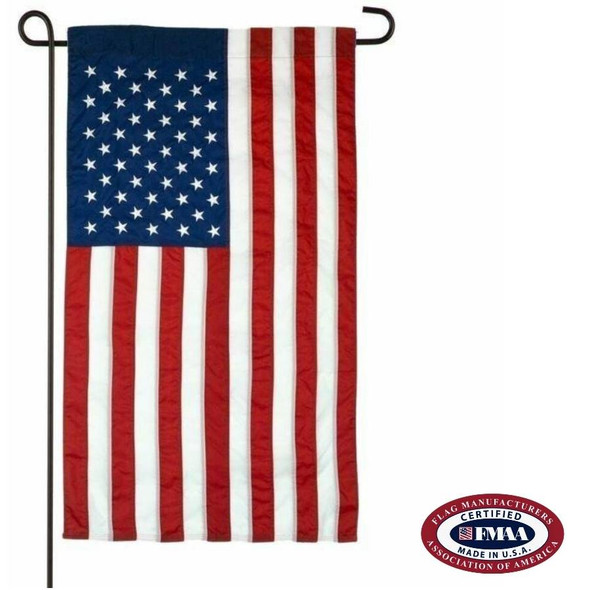
American Flag Buying Guide & FAQs
Flag Terminology
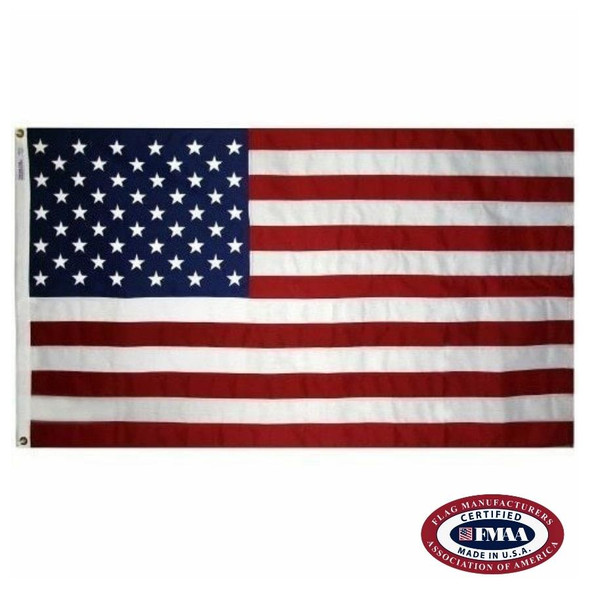
Printed vs Fully Sewn Flag Construction: Printed American Flags are created by printing the design directly onto lightweight nylon fabric. They are the most economical option and are best for light to moderate outdoor conditions. Fully Sewn American Flags are constructed by stitching together individual red and white stripes and appliqué stars. This construction provides greater strength, durability, and a traditional appearance. Key takeaway: Printed flags may cost less upfront, but fully sewn flags last longer and usually cost less over time because they do not need to be replaced as often.
Chain vs Lock Stitch Construction: Chainstitching is a basic stitching method. If one stitch breaks, the seam can unravel. Lock stitching secures each stitch independently, so damage to one stitch does not affect the rest of the seam. Recommendation: Lock-stitched flags are more durable and are strongly recommended for outdoor use.
Flag Size: To ensure you choose the right size for your American flag, here is a chart to determine the right flag for your flagpole.
Nylon: Nylon is lightweight and flies easily in light winds. It offers good durability for moderate conditions but will not last as long as heavier materials in harsh environments. – MOST POPULAR
Polyester: Polyester is heavier and designed for high-wind or extreme weather conditions. It offers the longest lifespan and is the best long-term value for outdoor flags exposed to frequent wind and sun. – BEST FOR HIGH WINDS
Cotton: Cotton flags are primarily used for indoor display, ceremonies, and memorials. The 5' x 9½' cotton American flag is traditionally used for casket draping. – VINTAGE STYLE
G-SPEC Flag: The G-SPEC flag is for use by the US federal government. The sizes are made to the official government hoist-fly ratio of 1:1.9. The star fields are larger and mostly purchased for display at military bases.
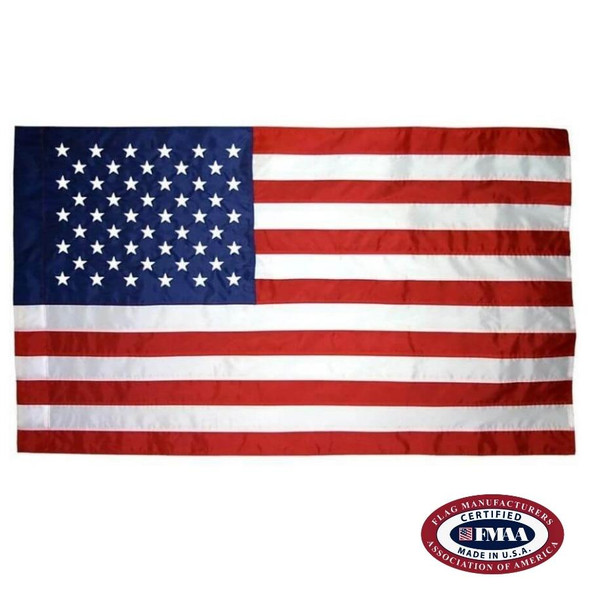
Header vs. Sleeve: Headers and sleeves refer to the finish of the flag. Learn the difference between a flag header and a sleeve.
FAQ on our American Flag Collection:
Q: Do printed American flags last as long as fully sewn American flags?
A: No. Fully sewn American flags are reinforced with stitching and heavier construction, allowing them to withstand outdoor conditions longer than printed flags. While printed flags may cost less initially, fully sewn flags generally provide better long-term durability and value.
Q: Do the printed & chain-stitched outdoor United States flags last as long as the fully sewn & lock-stitched United States flags?
A: No, the sewn American flag has more reinforcement than the printed flag.
Q: What is a nautical flagpole, and do you fly a nautical flag on it?
A: A nautical flagpole looks like the mast of a ship, which makes it a good option for marinas, yacht clubs, and seafront restaurants and shops. The classic US flag sizes are flown from this type of pole. Nautical American flags are made to be flown on an actual ship and run smaller than regular flags. So, no, you do not fly nautical flags on nautical flagpoles.
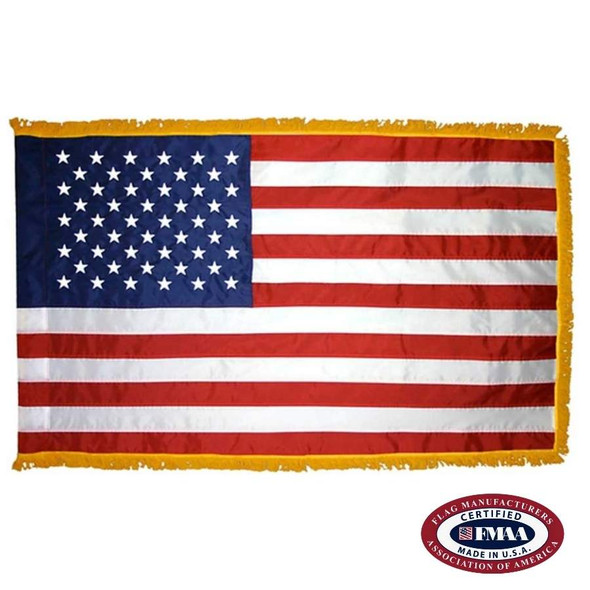
Q: Why are the indoor American flags the only ones available with a gold fringe?
A: The fringe is made of a different material than the flag itself. This material doesn't withstand outdoor elements the way the flag does and should only be used indoors.
Q: What is the standard-size flag?
A: The standard flag size is 3' x 5' or 36" x 60". Determine the right size flag for your flagpole.
History and Meaning of the American Flag
Q: What does the flag of the United States represent?
A: The national flag of the United States represents the independence and freedom of our country and its citizens. The alternating red and white stripes represent the thirteen original colonies, and the white stars represent the 50 states of the Union.
Q: What do the colors of the USA flag mean?
A: The colors of the United States flag all have their own significance. The white symbolizes purity & innocence. The red represents hardiness and valor. The blue field represents vigilance, perseverance, and justice. Learn more about the American flag and its meaning.
Q: When was the official flag of the United States adopted?
A: The Continental Congress passed an act adopting the Stars and Stripes flag as the official national flag on June 14, 1777. The decision “resolved that the flag of the United States shall be thirteen stripes alternating red and white, that the union be thirteen white stars in a blue background, representing a new constellation.” Congress passed several acts between 1777 and 1960 allowing stars to be added in the representation of new states. Today, the thirteen stripes alternate red and white, and the canton consists of 50 stars.
Q: Why do we stand and face the United States of America's national flag during our national anthem and Pledge of Allegiance?
A: On June 14, 1923, the National Flag Conference was held in Washington, where the Army, Navy, and other national groups adopted their own official flag etiquette to stand and face the flag, remove their caps, and put their right hand over their heart during the "Star Spangled Banner”. On June 22, 1942, it became public law as a code of conduct known as "The United States Flag Code." The code is a guide to displaying our white stars and 13 stripes, but it does not impose penalties for misuse of our official flag.
Q: How do you dispose of an American flag?
A: There is more than one to do this. There are flag-burning ceremonies, flag burials, and flag-shedding. Be respectful, in general. We have more details about the process on our blog.