

Description
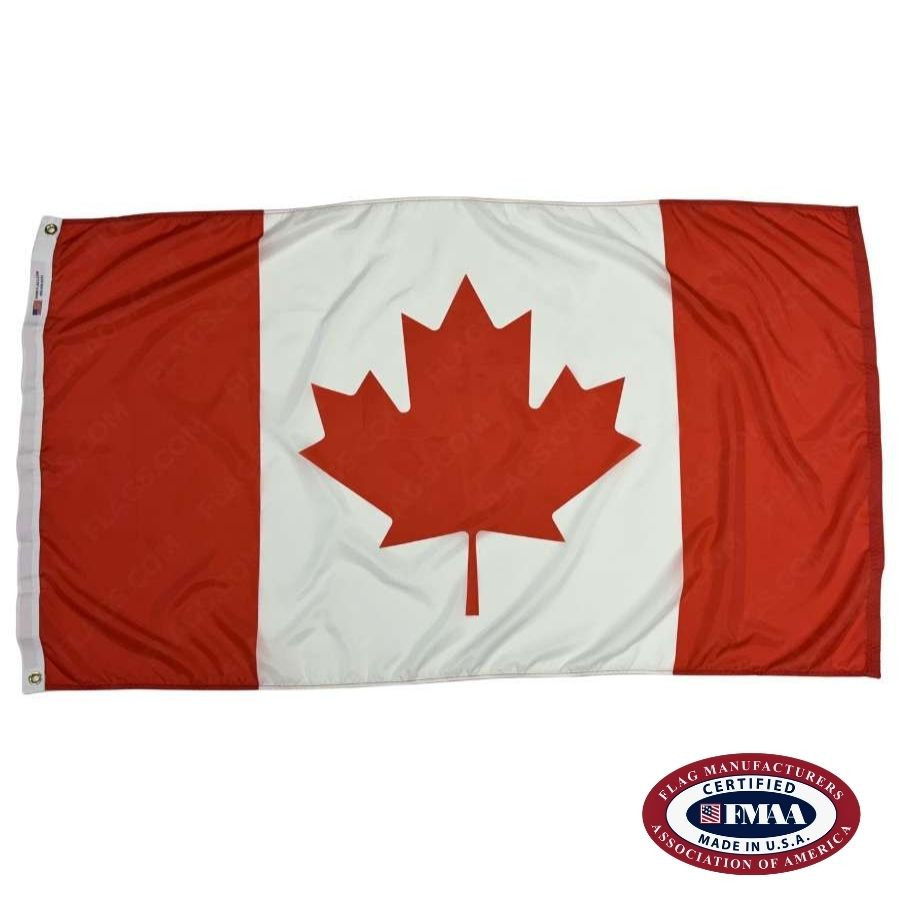
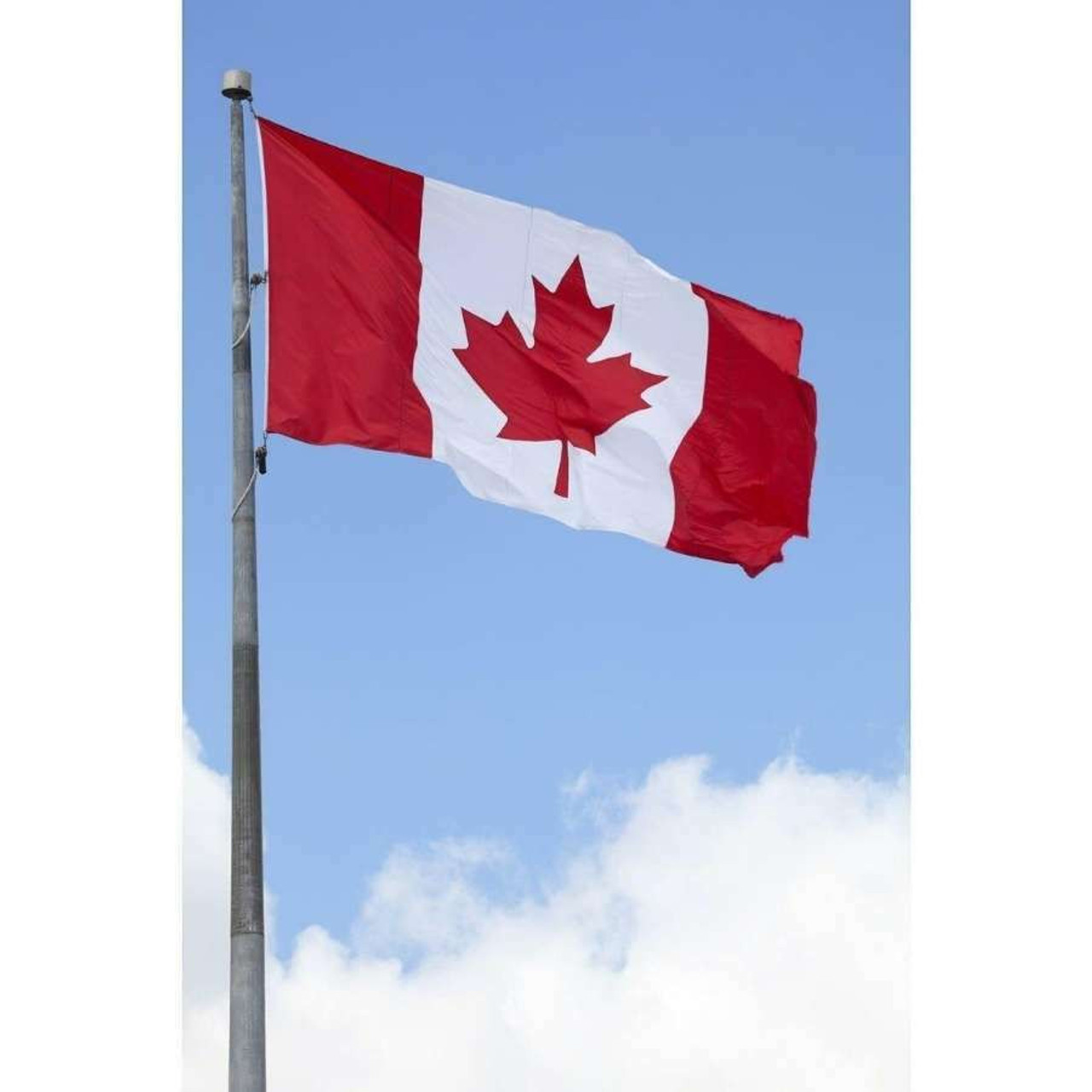
O Canada! Celebrate Canada's unique culture, nature, and history with a high-quality national flag. The Canadian maple leaf flag is one of the most recognizable flags in the world, featuring the iconic red maple leaf emblazoned on a red and white background.
Our American-made Canada flags are made from durable nylon fabric, which creates a sturdy, fray-resistant flag. Nylon is a quick-drying fabric, which helps prevent mildew growth after rain and snow. The iconic maple leaf design is digitally printed for precise details and vibrant, UV-resistant colors.
We offer flags of Canada in several sizes to best suit your needs, including 12” x 18’, 2’ x 3’, 3’ x 5’, 4’ x 6’, 5’ x 8’, and 6’ x 10’. Our most popular size is 3’ by 5’ or 91 cm by 152 cm if you use the metric system. Each flag has a strong canvas heading and brass grommets for secure flying on an outdoor flagpole. For assistance in choosing the right size for your needs, refer to our table of flag sizes and corresponding flagpole heights.
Pair your Canadian flag with one of your favorite provinces!
Canada Flag Features
- Made in the USA
- Official 1965 design
- 100% pure nylon
- Reinforced canvas heading
- Brass grommets for reliable flying
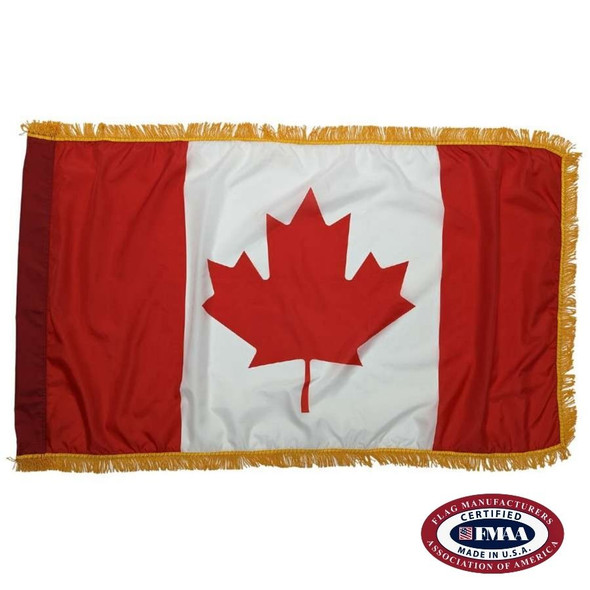
Interested in an indoor version for formal or ceremonial use? Check out our indoor flag of Canada, complete with gold fringe and a pole sleeve.
Check out our blog on flag care for information on how long your flag should last and how to increase its lifespan.
Canada Flag Meaning & History
Canada’s flag was adopted on February 15, 1965, the first and only unique flag design to represent the country. The Canadian territories had previously flown modified versions of the British Red Ensign, which can still be seen on the provincial flags of Ontario and Manitoba today. The maple leaf design was created by historian George Stanley, using a maple leaf icon designed by Jacques Saint-Cyr.
The national flag of Canada introduced a new type of flag design called the “Canadian pale,” in which the central stripe takes up half of the flag's width instead of the standard one-third. Maple leaves have been an important symbol in the region for centuries, representing the tree that Indigenous peoples in Eastern Canada tapped for sap. The maple leaf icon first appeared as an official national symbol in 1868, when it was used in the design of Ontario and Quebec’s coat of arms.
The red and white were proclaimed as Canada’s official colors in 1921 by King George V. Red is drawn from Saint George’s Cross, which can also be seen on the English national flag. White comes from the French royal emblems first used in King Charles VII’s reign.